MAUNA: Multiphase Analysis of (U)LIRG Nuclear Activity

Tracing Gas, Fueling, and Feedback in Merging Galaxies

Galaxies are made of stars, gas, and black holes, and the interplay between these components determines how a galaxy grows over time. Stars and black holes can change the chemical content of the gas reservoir and/or eject it entirely from the galaxy through winds — an outcome particularly prevalent in interacting galaxy systems that can shut down future generations of star formation. MAUNA leverages Keck and JWST integral-field spectroscopic observations to study the hot ionized and warm molecular gas phases in a representative sample of galaxy mergers, building a holistic picture of gas dynamics from the dusty nuclear cores out to the circumgalactic medium.
MAUNA Team

Vivian U (PI)
Caltech/IPAC
Justin Kader
Postdoc, Caltech/IPAC
Marina Bianchin
Juan de la Cierva Fellow, IAC
Yiqing Song
ESO Fellow, MPIfR
Raymond Remigio
Adjunct Faculty, Miramar College
Rosalie McGurk
Staff Astronomer, Keck Observatory
Paul Lynam
Staff Astronomer, Lick Observatory
Jorge Moreno
Faculty, Pomona College
Aaron Barth
Faculty, UC Irvine
Anne Medling
Faculty, University of Toledo
Loreto Barcos Muñoz
Associate Scientist, NRAO / NAASC
Gabriela Canalizo
Faculty, UC Riverside
Jeff Rich
Staff Astronomer, Carnegie Observatories
Phil Hopkins
Faculty, Caltech

A Holistic View of Gas Fueling and Feedback

MAUNA is an NSF AAG-funded program that uses Keck and JWST integral-field spectroscopic observations to trace how gas moves through the galactic ecosystem in a representative sample of merging galaxies. This framework enables a detailed, multiphase understanding of how mergers regulate their own star formation.

Multiphase Gas Across the Merger Sequence

To understand the self-regulation of star formation and black hole growth in interacting systems, we must map the complex cycles of gas fueling and feedback. The narrative of our team’s approach begins with the KOALA Survey (Keck OSIRIS AO LIRG Analysis), which established a high-resolution, near-infrared adaptive optics view of local luminous infrared galaxy nuclei. Early milestones in this campaign, such as mapping the deeply enshrouded nuclear dynamics of Mrk 273 (U et al. 2013), underscored the sheer complexity of gas flow and star formation in merging environments. This led directly to our statistical survey baseline (U et al. 2019), which revealed widespread nuclear feedback and localized shocks, providing the clear empirical springboards that made space-based follow-ups essential.

Building on these foundations, we secured JWST GO-01717 (PI: U, as part of the larger GOALS-JWST campaign with ERS-1328 and GO-3368: PIs Armus & Evans and GO-1991: PI Privon) to pierce the heavy veil of dust-obscured galactic cores using mid-infrared integral-field spectroscopy. This space-based viewpoint has revolutionized our understanding of AGN-driven nuclear outflows. For instance, our work on the circumnuclear gas dynamics of NGC 7469 (U et al. 2022c) resolved intricate, multi-component coronal line outflow, while subsequent near-infrared spectral mapping (Bianchin et al. 2024) provided a highly detailed look at the localized gas excitation and feeding structures surrounding the central black hole.

While JWST dissects the extreme, dust-entombed conditions of the nuclear cores, a concurrent Keck Cosmic Web Imager (KCWI) observational campaign leverages a wide field of view to trace the unobscured feedback operating at galactic and circumgalactic scales. Our wide-field mapping has demonstrated that feedback is highly multi-faceted; for example, we discovered massive cluster-driven winds driving large-scale energetic feedback across the starburst system VV 114 (Kader et al. 2025).

By knitting together the complementary capabilities of JWST and Keck/KCWI, MAUNA delivers a truly holistic view of multiphase outflows stretching seamlessly from sub-kiloparsec nuclear engines out to ten-kiloparsec galactic scales. Our ongoing analysis captures this full multi-scale connectivity across the entire merger sequence—whether mapping the precessing AGN jet-driven outflows in the VV 340 disk galaxy (Kader et al. 2026) or characterizing the massive, multi-phase biconical molecular and ionized winds in the local infrared merger IRAS 01364−1042 (Song et al. 2026).

Establishing a Baseline: The LAMP Control Sample

To definitively distinguish between feedback driven purely by galaxy interactions and the processes inherent to normal AGN, our approach relies on a baseline control sample. We harness a well-studied collection of local, non-merging Seyfert galaxies from the Lick AGN Monitoring Project (LAMP), building on our velocity-resolved Hβ lag infrastructure (U et al. 2022a). By leveraging wide-field Keck/KCWI observations across this control environment, we mapped extended [O III] emission-line kinematics to investigate large-scale feedback in isolated settings (Remigio et al. 2025).

Providing crucial contextual framework for these kinematic maps, our collaboration uses this same KCWI database to anchor unified black hole mass and host galaxy scaling relations. This includes tracing unified scaling laws across active and quiescent populations (Winkel et al. 2025) and determining definitive M–σ structures within the host galaxies of active nuclei (Bennert et al. 2026). Comparing and contrasting these results from quiescent hosts against active major mergers allows us to isolate the specific role that interactions play in shaping the cosmic lifecycle of gas.

Training the Next Generation of Observers

Beyond our core scientific focus, MAUNA is deeply committed to mentoring and expanding the capabilities of the astronomical community. We actively support the annual Observational Astronomy Workshop at Lick Observatory. As part of this initiative, I design and lead a specialized proposal writing and science communication module. This module provides hands-on training to graduate students, demystifying the competitive process of securing telescope time and equipping a diverse group of emerging observers with the professional tools needed to advance their research careers. You can learn more about the workshop instructors and core programming via the Lick Observatory Workshop Event page.

Science Result Highlights

Precessing AGN Jet Outflow Plot

A Precessing Jet Driving Galaxy-Scale Outflows

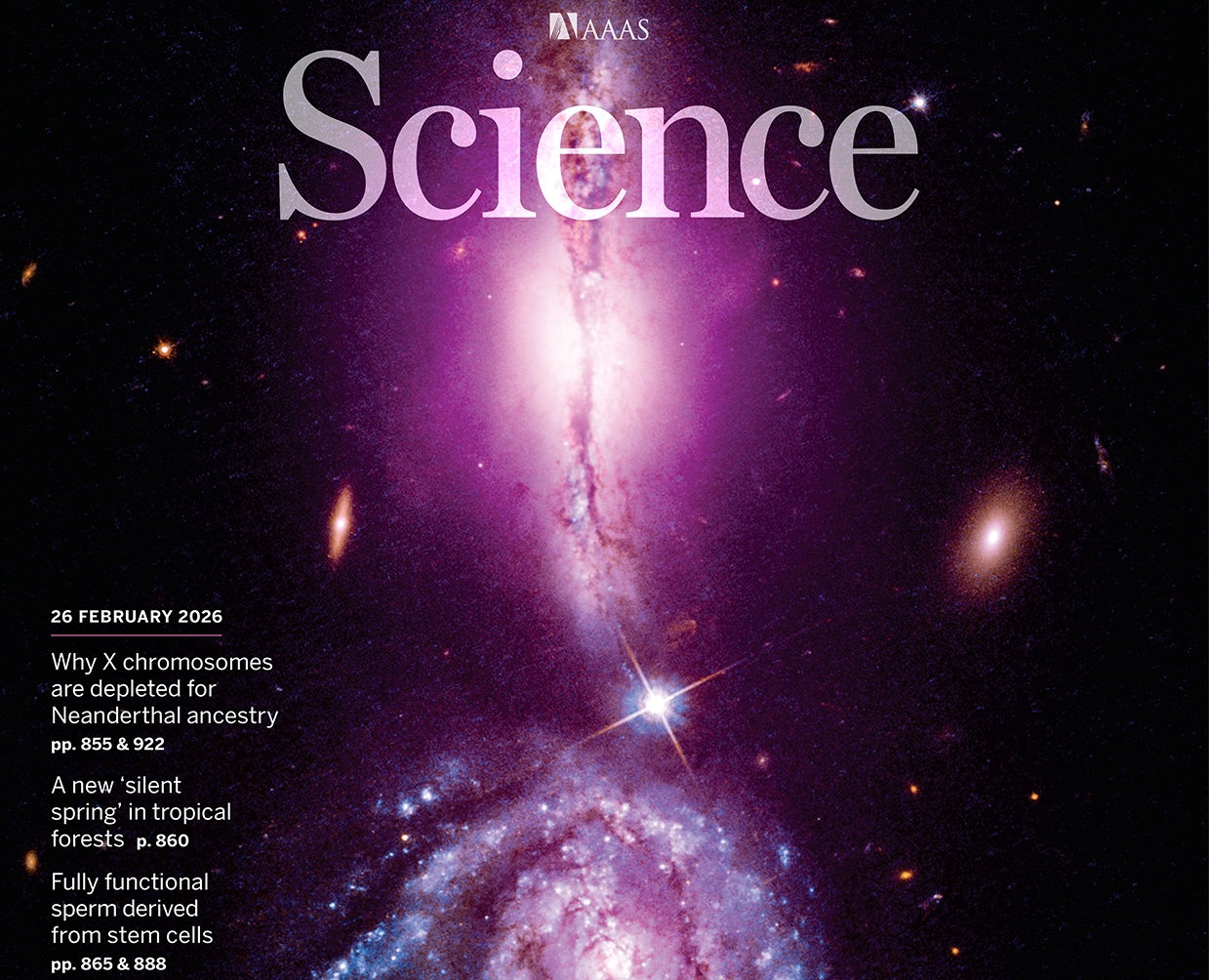
Using wide-field Keck/KCWI integral-field spectroscopy, we uncovered direct evidence of a precessing AGN jet actively driving a massive gas outflow across a host disk galaxy, definitively connecting small-scale nuclear engines to macro-scale feedback (Kader et al. 2026, featured on the cover of Science).

Distant Galaxy Pair Morphology Plot

Deconstructing the Nature of a Distant Galaxy Pair

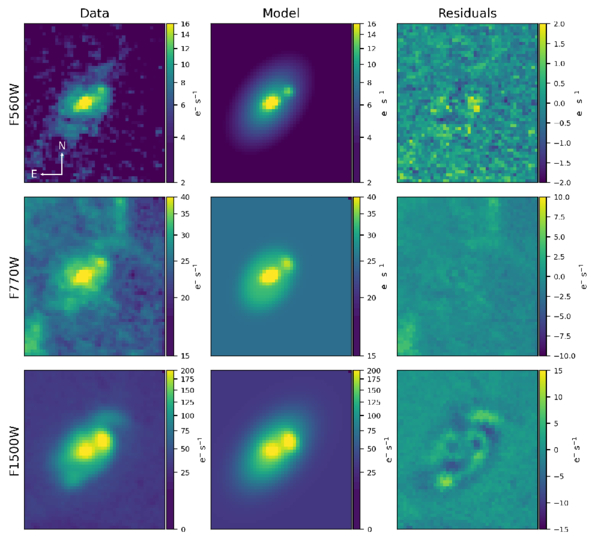
We modeled high-resolution kinematics to evaluate a distant galaxy pair at a tight 5 kpc projected separation, clarifying the intricate structural interplay between clumpy disks, potential interlopers, and active major mergers in the early universe (Aziz, U, et al. 2026).

Multiphase Biconical Outflow Map

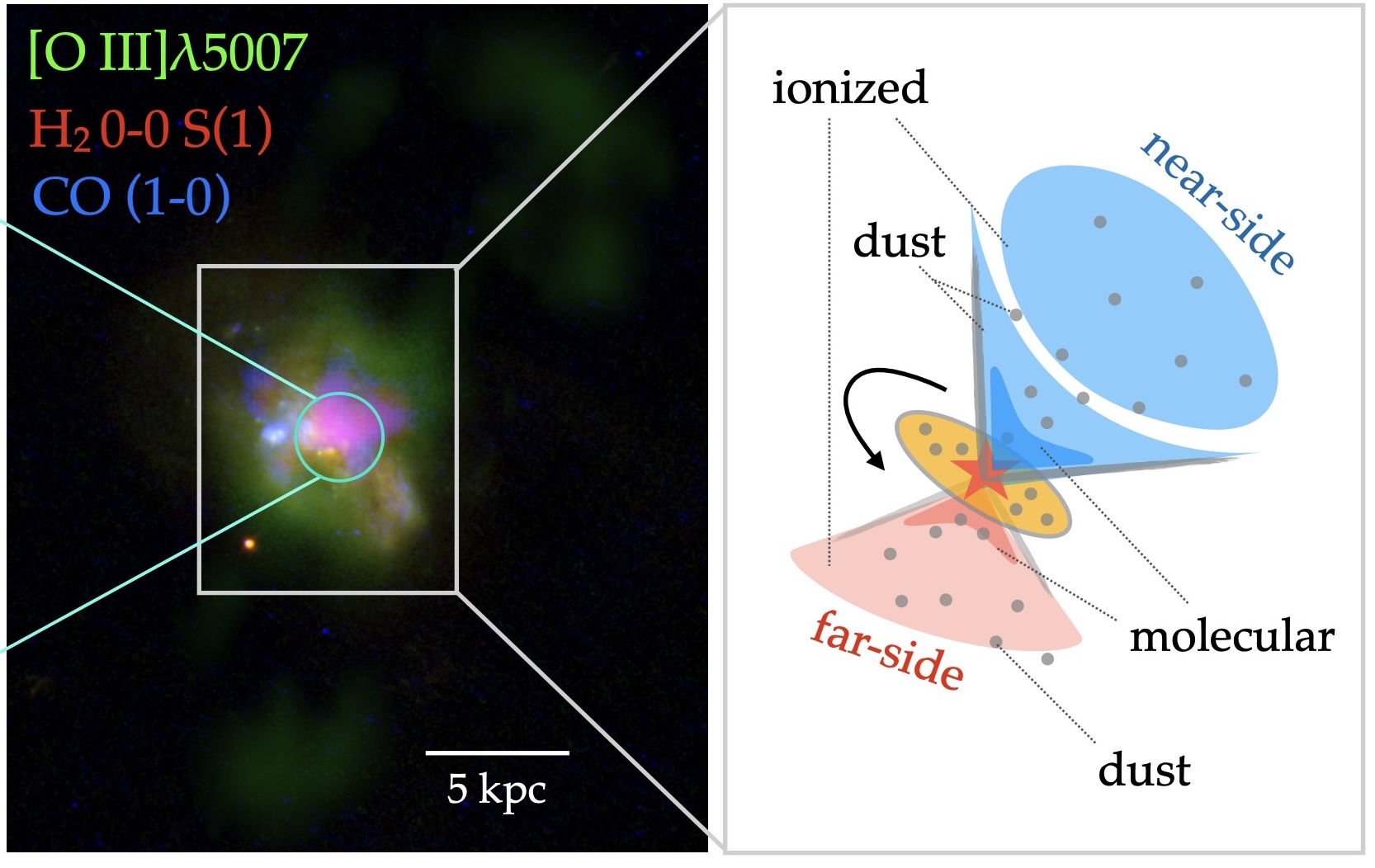
The Multiphase Biconical Wind of IRAS F01364

Our comprehensive investigation maps a dramatic multi-phase biconical wind in a local infrared-luminous merger, detailing the shared kinematics and spatial extension of molecular and ionized gas outflows within the nuclear ecosystem (Song, U, et al. 2026).

KCWI OIII Kinematics Map

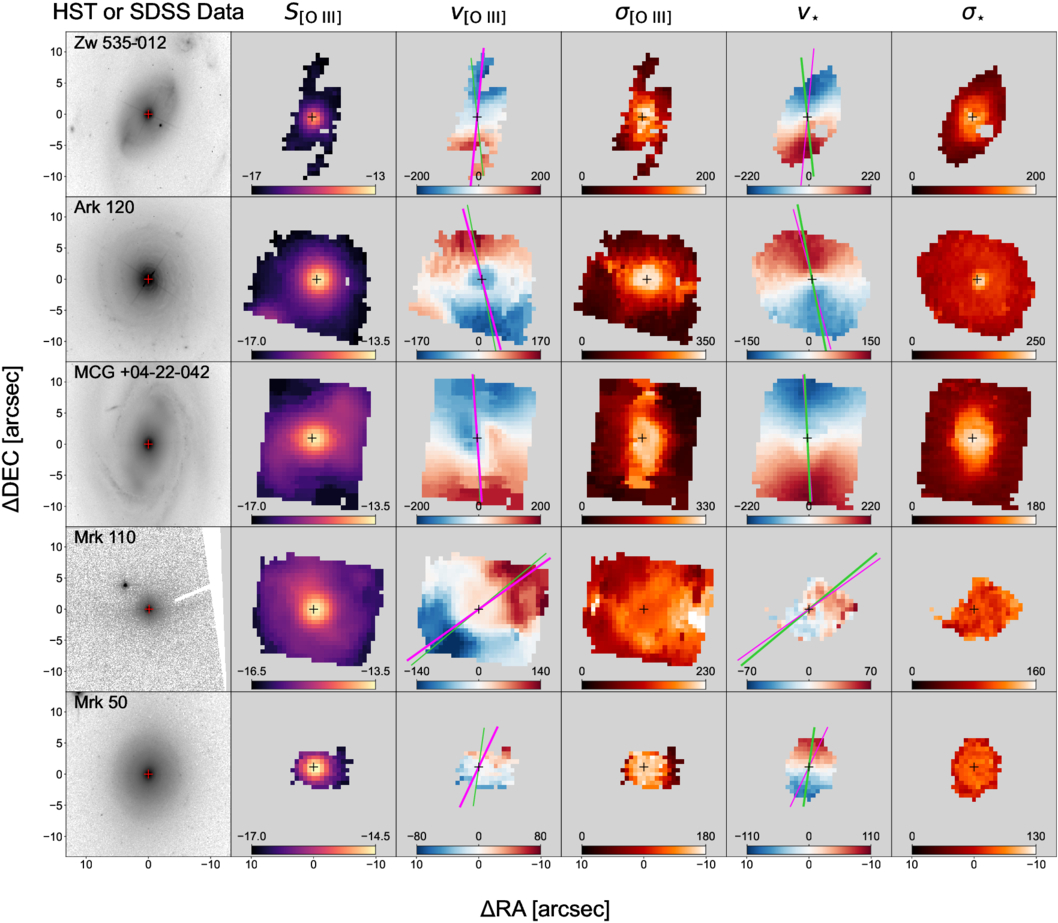
Spatially Resolved [O III] Kinematics via KCWI

By leveraging the wide-field capabilities of Keck/KCWI, we mapped the extended [O III] emission-line kinematics across a sample of reverberation-mapped AGNs, tracing the footprints of large-scale, unobscured nuclear feedback (Remigio, U, et al. 2025).

Cluster Winds and Feedback in VV 114

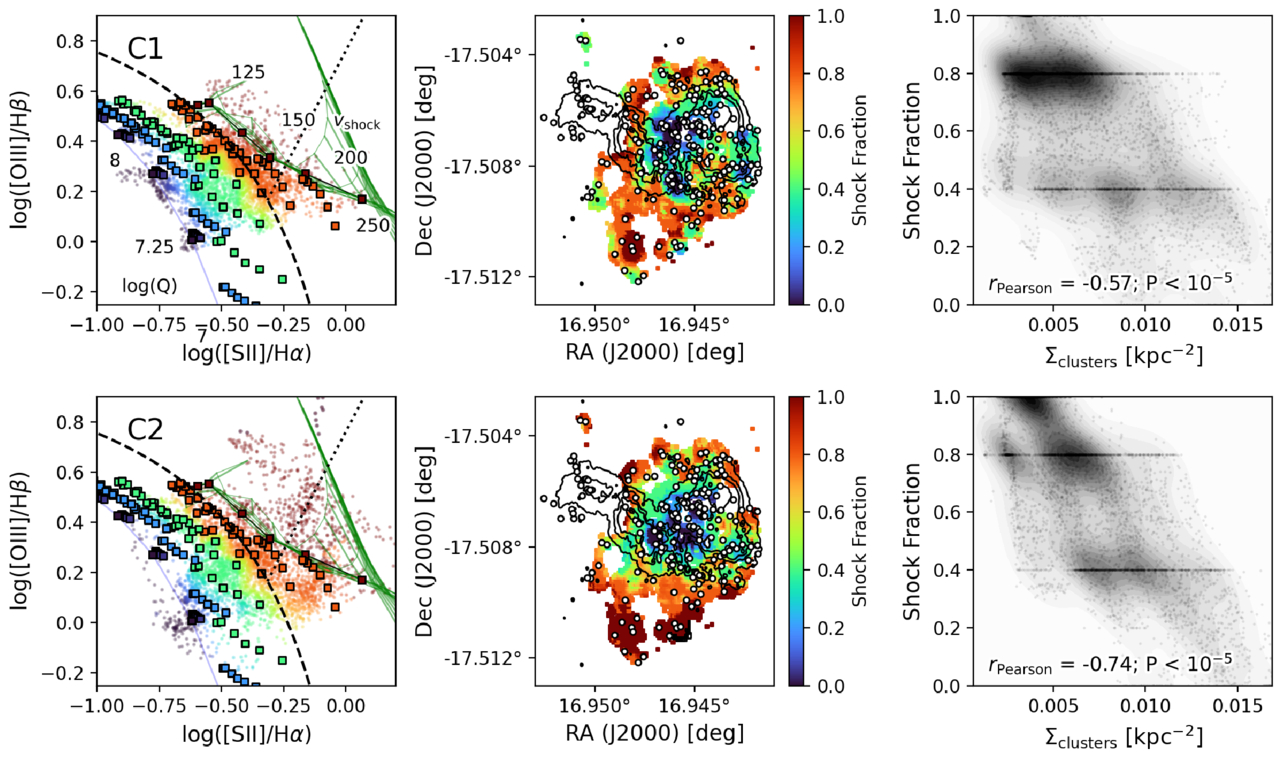
Cluster Winds Driving Feedback in VV 114

We demonstrated that feedback isn't driven solely by central massive black holes; massive, energetic star-cluster-driven winds act as vital engines of large-scale mechanical feedback across the interacting starburst system VV 114 (Kader, U, et al. 2025).

Nuclear SEDs of LIRGs Plot

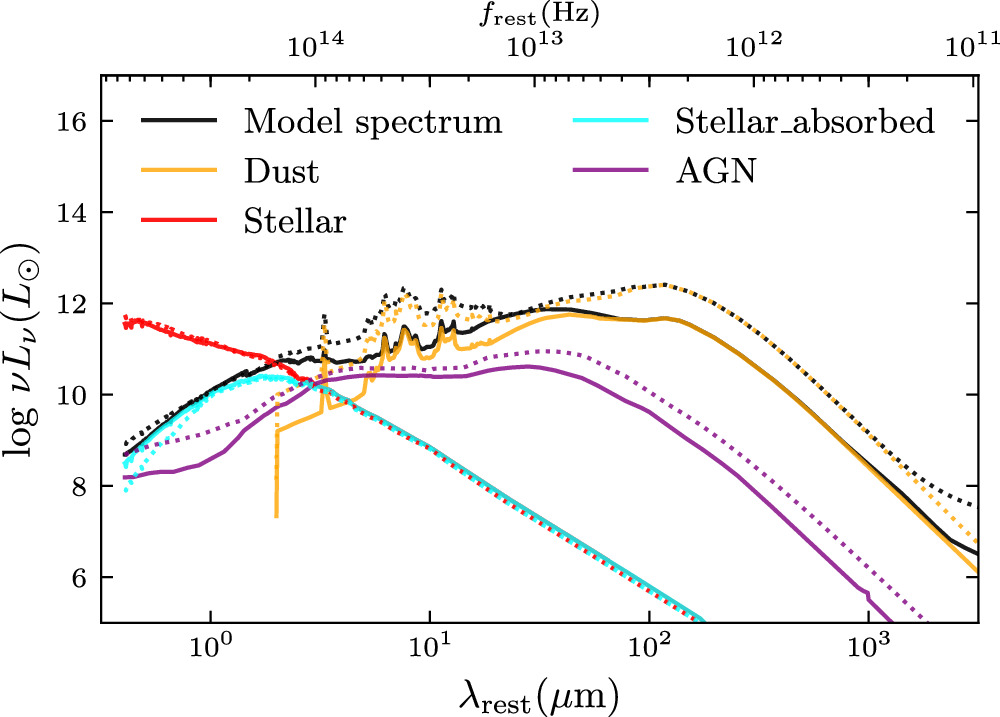
Nuclear Spectral Energy Distributions of LIRGs

We systematically dissected the nuclear spectral energy distributions (SEDs) of a representative sample of local LIRGs, isolating the contributions of dust-obscured starbursts and buried AGN to the mid-infrared energy budget (Gao, U, et al. 2025).


Publication List

  1. Song et al. 2026, "The Multi-phase Biconical Outflow in the local IR-Luminous Merger IRAS F01364−1042", A&A, accepted (ADS)
  2. Aziz et al. 2026, "Clumpy Disk, Interloper, or Merger? Nature of a Distant Galaxy Pair at 5 kpc Projected Separation", ApJ, 1005, 224 (ADS)
  3. Kader et al. 2026, "A precessing jet from an active galactic nucleus drives gas outflow from a disk galaxy", Science, 391, 911 (ADS)
  4. Bennert et al. 2026, "The Host Galaxies of Active Galactic Nuclei with Direct Black Hole Mass Measurements", ApJ, 1000, 48 (ADS)
  5. Remigio et al. 2025, "Spatially Resolved [O III] Emission Line Kinematics of Reverberation-mapped Active Galactic Nuclei with the Keck Cosmic Web Imager", ApJ, 992, 42 (ADS)
  6. Kader et al. 2025, "Shockingly Effective: Cluster Winds as Engines of Feedback in Starburst Galaxy VV 114", ApJ, 988, 230 (ADS)
  7. Gao et al. 2025, "Nuclear Spectral Energy Distributions of Luminous Infrared Galaxies", ApJ, 988, 185 (ADS)
  8. Winkel et al. 2025, "Combining Direct Black Hole Mass Measurements and Spatially Resolved Stellar Kinematics to Calibrate the M–sigma Relation of Active Galaxies", ApJ, 978, 115 (ADS)
  9. Bianchin et al. 2024, "GOALS-JWST: Gas Dynamics and Excitation in NGC 7469 Revealed by NIRSpec", ApJ, 965, 103 (ADS)
  10. U et al. 2022c, "GOALS-JWST: Resolving the Circumnuclear Gas Dynamics in NGC 7469 in the Mid-infrared", ApJ, 940, L5 (ADS)
  11. U et al. 2022a, "The Lick AGN Monitoring Project 2016: Velocity-resolved Hβ Lag Profiles from Optical Spectroscopic Monitoring", ApJ, 925, 52 (ADS)
  12. U et al. 2019, "Keck OSIRIS AO LIRG Analysis (KOALA): Feedback in the Nuclei of Luminous Infrared Galaxies", ApJ, 871, 166 (ADS)
  13. U et al. 2013, "The Inner Kiloparsec of Mrk 273 with Keck Adaptive Optics", ApJ, 775, 115 (ADS)

Contact Us

Interested in learning more about MAUNA or collaborating with us? Get in touch!
Feel free to reach me at vivianu [at] ipac [dot] caltech [dot] edu.


This work is supported by NSF AAG Award AST-2536603.